
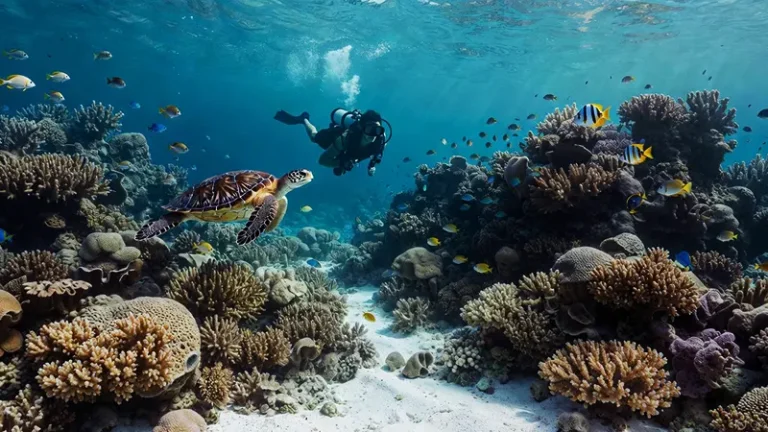

Scuba Diving in Gili Trawangan
Gili Trawangan has this magnetic pull. People come for the beaches, but they stay for the ocean. Scuba diving in Gili Trawangan is one of those experiences that feels simple on the surface yet stays with you long after you leave.
The island’s mellow vibe hides an underwater world that’s surprisingly alive, colorful, and—if you let it—transformative.
I still remember my first descent here. I had just rolled back from the boat, bubbles rising past my mask. The noise of the surface faded, replaced by a soft hum of the reef.
It was calm… almost too calm. Then a turtle glided past like it owned the place, and something clicked.
If you’re planning your trip, you can also check my guide on how to get to Gili Trawangan from Bali so you know the easiest way to reach the island before diving.
That’s the “why” of this topic. Diving here isn’t just an activity. It’s a feeling, a memory, a story you take home.
And the “what”? It’s everything. The reefs, the currents, the turtles, the night dives, the people you meet, the slow conversations after surfacing.
Let’s break it down.
Why Gili Trawangan Is One of Southeast Asia’s Most Loved Dive Spots
Gili Trawangan isn’t the biggest island.
But it packs a diving punch that rivals places with more fame and bigger marketing budgets.
The Gili Islands sit along a coral triangle zone—one of the most biodiverse marine areas on the planet.
That means healthy corals, wide species variety, warm water, and good visibility almost all year.
A Reef That Feels Alive
On a typical dive day, visibility can stretch 20–30 meters. You’ll see turtles, cuttlefish, reef sharks, and massive schools of fusiliers drifting by like underwater confetti.
Beginner-Friendly But Still Fun for Experienced Divers
I always tell people that Gili T has a unique balance. Beginners thrive because the reefs are shallow and calm.
Experienced divers still stay challenged thanks to the deeper sites and drift diving.
That “Island Time” Feeling
Something about diving here just feels slow in the best way. You dive, rinse off the salt, grab a coconut, and watch a sunset that looks CGI-enhanced.
It keeps the whole experience grounded and human.
Diving Conditions You Should Know Before You Go
Water Temperature and Visibility
The water stays warm year-round, usually around 27–29°C. Visibility tends to stay clear unless rain clouds roll in during peak monsoon season.
Currents: The Drift Dive Charm
Some dive sites have gentle currents perfect for beginners. Others offer exhilarating drifts where you simply float as the reef moves past.
When I first drift-dove in Halik Reef, it felt like sliding on an underwater conveyor belt. Zero effort, maximum scenery.
Seasonal Differences
- Dry season (May–October): clearest visibility
- Wet season (Nov–April): softer light and more plankton, which attracts bigger marine life
- Peak turtle activity: almost year-round, but you’ll see more in calmer months
The Best Dive Sites Around Gili Trawangan
Shark Point
Despite the name, it’s not “sharky” in a scary way. You may spot blacktips cruising around but nothing aggressive.
It’s a mix of sloping reefs and sandy patches—great for spotting rays.
Halik Reef
Crystal blue water with long stretches of coral and steady drift conditions. Perfect for relaxed dives, especially in the afternoon light.
Turtle Heaven (Trawangan Slope)
If seeing turtles is your goal, this is your place. I once counted seven in a single drift without even trying.
Deep Turbo
For advanced divers, this site offers deeper terrain, towering bommies, and vibrant soft corals. You feel the scale of the ocean here.
What Marine Life You’ll Likely See
Turtles (Your Almost Guaranteed Encounter)
Hawksbill and green turtles frequent these waters. They’re calm, curious, and often glide right beside you as if posing.
Reef Sharks
Small blacktip reef sharks are common but shy. You usually catch them in the periphery, cruising confidently.
Cuttlefish and Octopus
Cuttlefish here come in colors you didn’t know existed. Octopus sightings are thrilling—they always look like they’re planning something.
Macro Life (If You Love the Tiny Stuff)
Nudibranchs, shrimps, pipefish, and miniature wonders hide in corners. Gili T is underrated for macro, but it’s quietly impressive.
My First Night Dive in Gili Trawangan
This one sticks with me. My instructor had warned me that night diving feels different.
He wasn’t wrong. The moment my light hit the reef, the colors glowed like neon signs.
Crabs scuttled. Parrotfish slept in mucus bubbles. A hunting lionfish followed my beam like a spotlight.
But the moment that got me was when we turned our lights off. Bioluminescence lit up like drifting stars.
I waved my hand, and the water sparkled. If someone had told me this was “normal,” I wouldn’t have believed them.
Preparing for Your First (or Next) Dive in Gili Trawangan
Gear Fit Matters More Than You Think
Even if you don’t own gear, take time to try everything. A poorly fitting mask can ruin an otherwise perfect dive.
Communication Is Key
Tell your instructor or dive guide what you’re nervous about. They’ve heard everything, and nothing is embarrassing.
Take Your Time on Descent
There’s no rush. Equalize often, breathe slowly, and let the reef reveal itself.
Respect the Marine Life
Don’t touch corals. Don’t chase turtles. Float like a polite guest.
The “Surface Interval Moments” Are Part of the Magic
Surface intervals around Gili T are underrated. You sit on the boat, hair still dripping, looking at Lombok’s mountains in the distance.
There’s always that easy conversation with people you’ve just met but somehow feel close to already. Those moments make the whole day feel full.
A First-Time Diver Who Thought They Would Panic
A friend I met here—we’ll call her Mae—was terrified before her Discover Scuba Dive. She almost backed out after her first breath from the regulator.
We floated at the surface as she tried again. Slow breath in. Slow breath out.
When she finally descended to 2 meters, her eyes widened behind the mask. Not fear—wonder.
By the end of the dive, she surfaced laughing. She saw two turtles, a dancing cuttlefish, and a coral garden that looked like a scene from a dream.
Two years later? She’s now an advanced diver and still calls Gili T her “origin story.”
Scuba diving in Gili Trawangan is less about checking a destination off a list and more about letting the ocean reshape your sense of calm.
The reefs here remind you to breathe slower. The turtles remind you to move with ease.
The currents remind you that sometimes the best thing to do is drift and trust the ride. If you ever step into these waters, give yourself space to feel the full moment.
Let the ocean show you something new. And when you surface, take a minute to just float and listen.
It stays with you longer than you’d expect.
FAQ
Is scuba diving in Gili Trawangan good for beginners?
Yes. The reefs are shallow, the currents manageable, and there are many beginner-friendly dive sites.
When is the best time to dive in Gili Trawangan?
May–October offers the clearest conditions, but diving is great year-round.
Do you need to be a strong swimmer?
Basic comfort in the water helps, but you don’t need advanced swimming skills.
Will I see turtles?
Almost certainly. Turtles are abundant and calm around divers.
Is drift diving safe for new divers?
With proper guidance, yes. The drifts here are mild and often relaxing.